
RecPro® Roofing
8.5' Wide PVC RV Rubber Roof Kit in White
- SKU:
- ROOF2-Kit-5


 FREE SHIPPING
 100% GUARANTEE
 MANUAL
Description
*DISCLAIMER: Roofing ships in a box; It's important to unpack roofing material as soon as possible to avoid creasing*
*30'-40' kits may have adhesive shipped in a 2 gallon pail based on availability
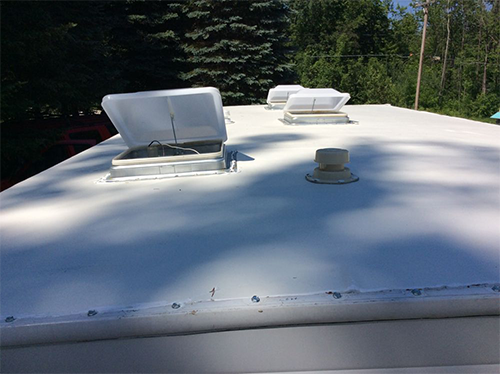
Roof maintenance is an important factor when owning an RV. It's important to check your RV roof once a year to make sure there are no tears, discoloration, cracks or punctures. For years, rubber roof has been the industry's standard for recreational vehicles and even commercial roofing and for good reason. PVC roofing goes beyond that of EPDM or TPO and in so many ways. For example, once you've got it on your RV, maintenance becomes a thing of the past.
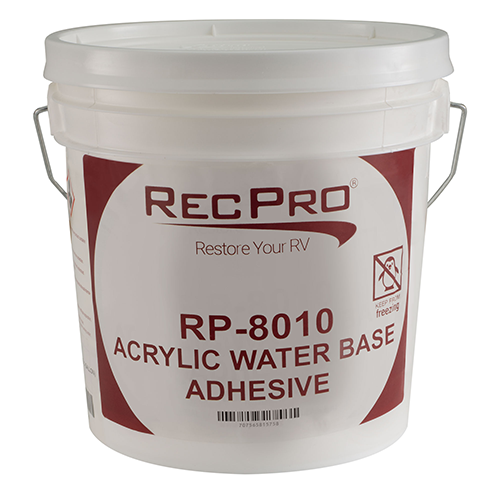 This kit provides you with every component you need in installing your RV roof. It's important to note what size kit you will need for some kits contain different amounts of adhesive. RecPro PVC is flexible, assuring you will get a tight and snug fit around the edges and corners of your roof, eliminating any leaking. It also provides outstanding installation for your RV, helping you save on energy costs.
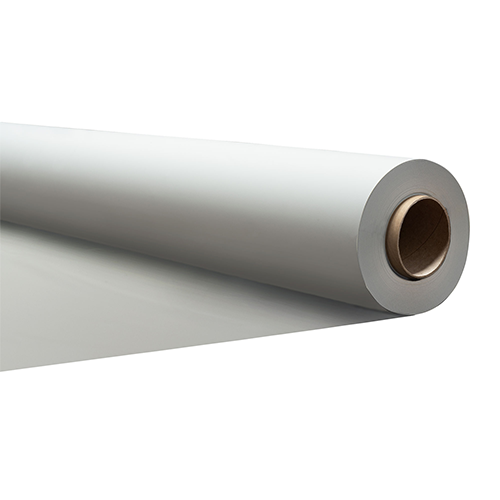 PVC is one of the best roofing materials for your RV for several reasons. First, PVC RV roofing is the strongest RV membrane, with the highest tensile strength and being tear-resistant and puncture-resistant. In addition, it's 100% maintenance free. With TPO and EPDM, if you're not maintaining it, then it's decaying. With PVC, once you've got it installed, you don't have to condition it or worry about it becoming damaged. With antimicrobial properties as well as extra strong construction, mold, mildew, and algae will be a thing of the past and animal fat or droppings will not damage it, as it would TPO or EPDM. Flexible enough to be installed on a sloped roof, it even comes with a manufacturer 15-year non-prorated warranty, the best warranty in the market. If this isn't enough, the PVC is more reflective than other roofing materials, keeping away a noticeable amount of heat from getting into your RV, keeping down cooling costs. With no chalk, spots, or black streaks, you just can't go wrong with PVC RV roofing.
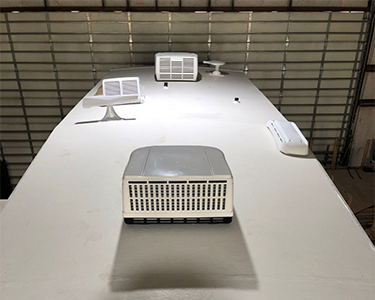
ADHESIVE DESIGNED TO BOND:
The bonding agent is designed to adhere to any porous surfaces. Will not adhere to non-porous surfaces like metal or fiberglass. Also, it should not be used to bond rubber to rubber. To remove adhesive from area, use water and a rag.
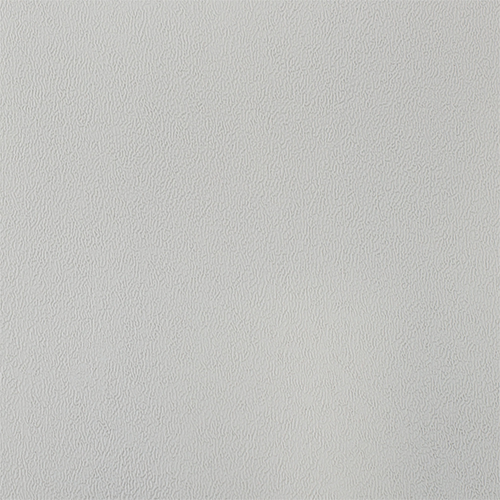
**Any wrinkles or surface inconsistencies are purely cosmetic and will not affect the structural effectiveness of the material**
**PLEASE NOTE** All fiberglass/flooring/Superflex/PVC/Roofing cuts are obtained from a master roll. This means the ends will have a rough edge and will be longer than the purchased cut length. This is done so the customer may cut the piece to exact specifications. Customers will make final cuts.
*Butyl tape packaging is subject to change
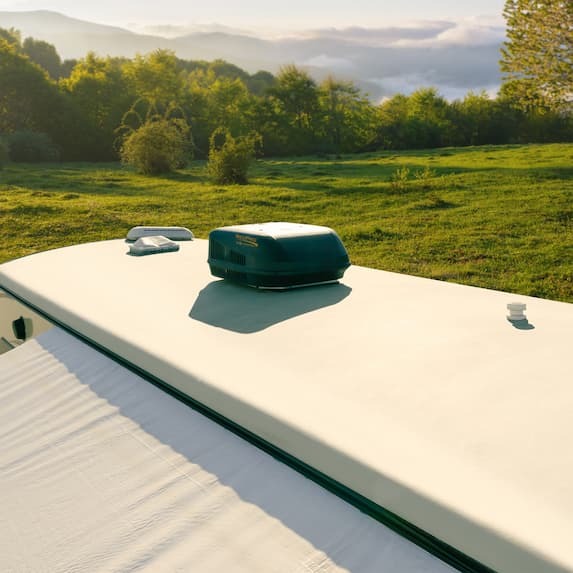
Features:
- 8' 6" wide
- Made in USA
- .027" Thick
- Industry standard for RV roofing
- Weather proof
- Energy efficient
- Highest tensile strength
- Tear-resistant
- puncture-resistant
- 100% maintenance free
- More reflective (keeps your RV cooler)
- Anti-microbial
- Strong durable synthetic rubber
- Watertight seal
- Fast drying time for RecPro Adhesives
- Both sides smooth for easy installation on either side
- Flexible enough to install on a sloped roof
- Upgrade from Dicor EPDM
- Best in Market 15 year non-prorated warranty from manufacturer
What each kit contains:
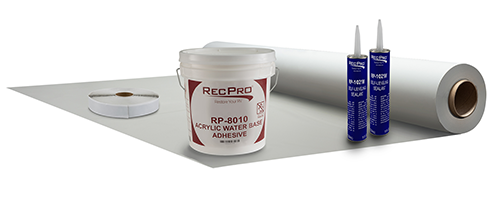
RV Rubber Roof Kit 5 Feet- 5 Feet of Rubber Roof PVC by 8 1/2 feet
- 2 tubes of Self Leveling Sealant (11 oz)
- 1 Roll of Butyl Tape (30' L)
- 1 Gallon of Rubber Roof Adhesive (8010)
- 10 Feet of Rubber Roof PVC by 8 1/2 feet
- 4 tubes of Self Leveling Sealant (11 oz)
- 2 Roll of Butyl Tape (30' L)
- 1 Gallon of Rubber Roof Adhesive (8010)
- 15 Feet of Rubber Roof PVC by 8 1/2 feet
- 4 tubes of Self Leveling Sealant (11 oz)
- 2 Rolls of Butyl Tape (30' L)
- 1 Gallon of Rubber Roof Adhesive (8010)
- 20 Feet of Rubber Roof PVC by 81/2 feet
- 4 tubes of Self Leveling Sealant (11 oz)
- 3 Rolls of ButylTape (30' L)
- 1 Gallon of Rubber Roof Adhesive (8010)
- 25 Feet of Rubber Roof PVC by 8 1/2 feet
- 4 tubes of Self Leveling Sealant (11 oz)
- 3 Rolls Butyl Putty Tape (30' L)
- 1 Gallon of Rubber Roof Adhesive (8010)
- 30 Feet of Rubber Roof PVC by 8 1/2 feet
- 5 tubes of Self Leveling Sealant (11 oz)
- 4 Rolls of Butyl Tape (30' L)
- 2 Gallons of Rubber Roof Adhesive (8010)
- 35 Feet of Rubber Roof PVC by 8 1/2 feet
- 5 tubes of Self Leveling Sealant (11 oz)
- 4 Rolls of Butyl Tape (30' L)
- 2 Gallons of Rubber Roof Adhesive (8010)
- 40 Feet of Rubber Roof PVC by 81/2 feet
- 5 tubes of Self Leveling Sealant (11 oz)
- 4 Rolls of ButylTape (30' L)
- 2 Gallons of Rubber Roof Adhesive (8010)
- 45 Feet of Rubber Roof PVC by 81/2 feet
- 5 tubes of Self Leveling Sealant (11 oz)
- 4 Rolls of ButylTape (30' L)
- 2 Gallons of Rubber Roof Adhesive (8010)
PVC Roofing Maintenance and Cleaning Tips
The PVC roof membrane is designed with a smooth finish that helps reduce the build-up of dirt and debris, while also making it easy to clean.
Once a month, use a broom or brush to sweep dirt and debris, such as leaves and twigs, off of the roof, then rinse using clean water. Sweep and rinse your PVC roof more frequently if you are camping in the fall or in an area with frequently falling leaves to avoid or reduce staining.
Lift and remove large debris such as large sticks or branches as soon as possible. Avoid dragging large debris when removing to avoid scratching, tearing, puncturing, or otherwise damaging the PVC roof.
Periodically wash the PVC roof membrane using only clean water, household soaps such as Dawn dish soap, and a plastic brush or scrubber. For tougher and more stubborn dirt, grime, or stains, use the following recommended cleaners:
- Fantastick
- Soft Scrub
- Windex
- Tilex
- Murphy Oil Soap
- A 50/50 mix of water and white vinegar
Do NOT use a power/pressure washer to clean or rinse the PVC roof membrane. The spray may be too aggressive and could cause tearing or other damage to the membrane. Use only a regular water hose and sprayer to rinse off the roof membrane.
Do NOT use abrasive pads, metal scrubbers or brushes with metal bristles, as they can damage the PVC roof membrane.
Do NOT use any products or cleaners that contain solvents or abrasives. Avoid using petroleum based distillates such as citrus cleaners or mineral spirits, as they can soften the membrane.
It is NOT RECOMMENDED that you clean the roof by taking your RV or trailer through a car wash. Debris and/or rust or other metal fragments from other vehicles can get stuck in the brushes of car wash systems, which could cause damage to the PVC membrane.