
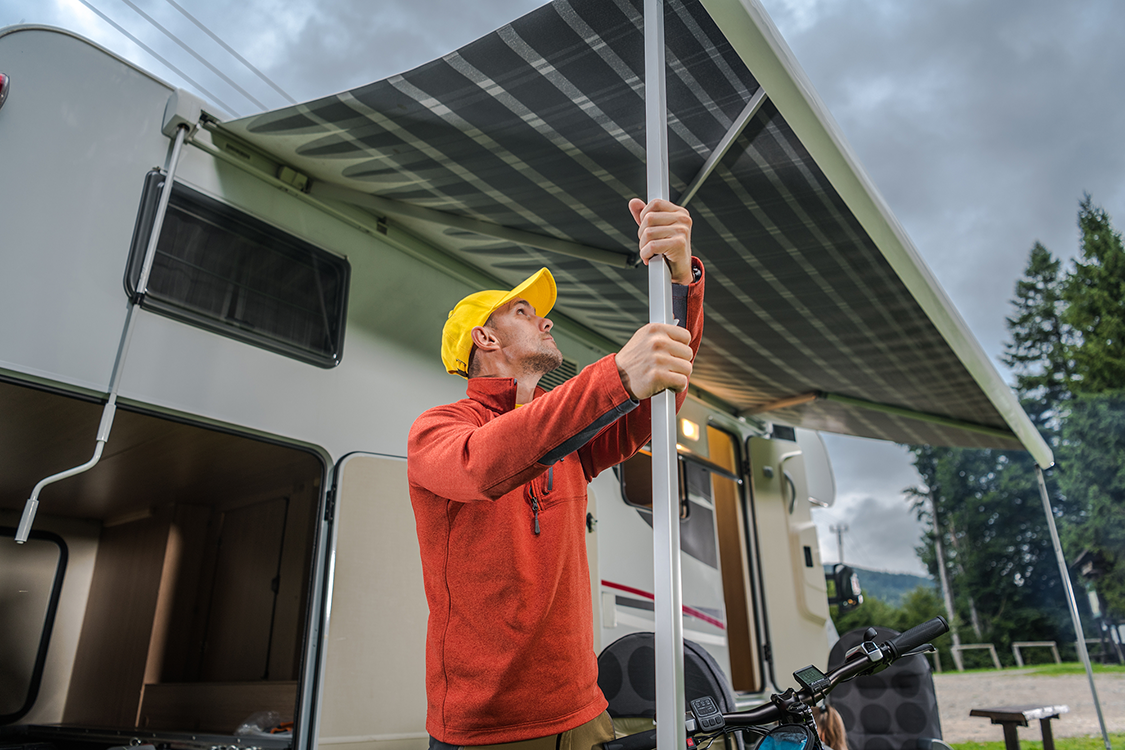
RV Awning Material Guide: Everything You Need to Know Before Buying
An awning is a great way to expand your RV's outdoor living space while adding shelter from sun and rain. An awning that’s starting to show signs of wear or tearing might be able to wait a few weeks, but likely not through your next camping trip. Before you replace it, know that not every RV awning is made the same way, and not researching how RV awning fabrics are made or how to care for them can lead to preventable problems.
This guide covers the most common RV awning fabrics, explains the specifications you’ll see while browsing, and shows you how to measure and match fabric to your RV setup and camping style. By the end, you'll hopefully be able to read any replacement fabric listing and know exactly what you’re looking for.
Understanding the 3 Most Common Types of Awning Fabric
RV awnings are fabric sheets rolled out over the outdoor area next to the unit to provide extra overhead coverage from the sun and weather. Below is information on the three most common RV awning fabric materials. These materials differ in ways that may affect which option is best for you.
Vinyl Fabric Details
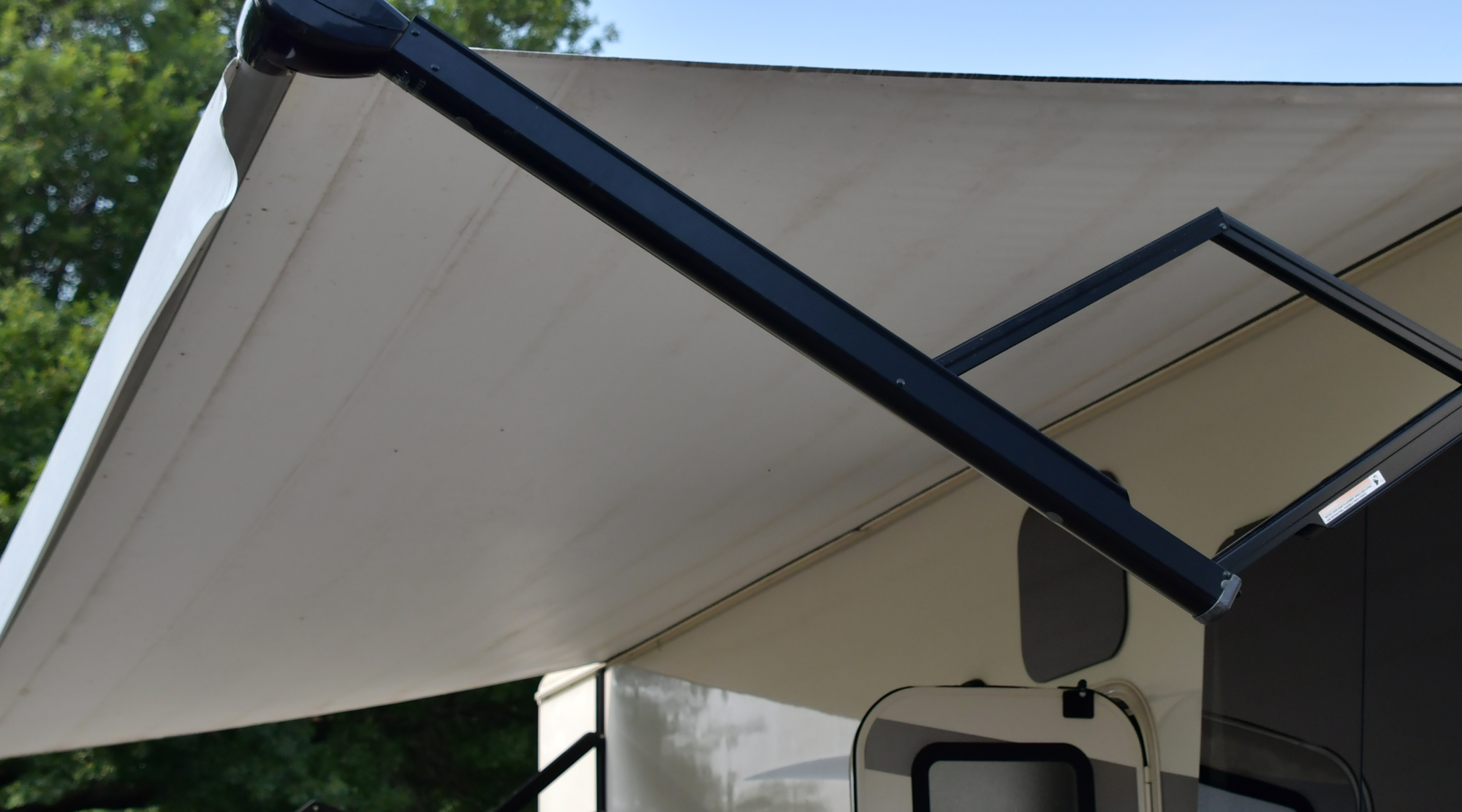
Vinyl awning fabric is made of a high-strength polyester (PET) scrim mesh coated on both sides with polyvinyl chloride (PVC) layers. The PET layer provides the fabric's base strength and structure, and the PVC layers form a waterproof shield. Garden hoses and large event tents use this same construction.
Vinyl fabric’s biggest strengths are that it is fully waterproof and relatively easy to clean. Rain can’t penetrate its surface, which makes it ideal for places prone to long spells of harsh, wet weather. You can easily clean off dirt and grime that build up over your vacation with a hose or light scrub.
Its weaknesses are heat build-up and extensive sun exposure. Because vinyl is made of multiple fabric layers, it's denser and less breathable than other fabrics, so the space beneath it tends to run warmer on sunny days. Prolonged UV exposure can also cause color fading and overall deterioration, so if you’re going with vinyl, look for a listing that specifically states it has been treated with an additional UV-protective coating or includes an extra UV-blocking material layer.
Vinyl is the right pick for:
- Rainy, cool locations
- Campers who want waterproof protection
- Campers who prefer easier, but more frequent maintenance
Acrylic Fabric Details
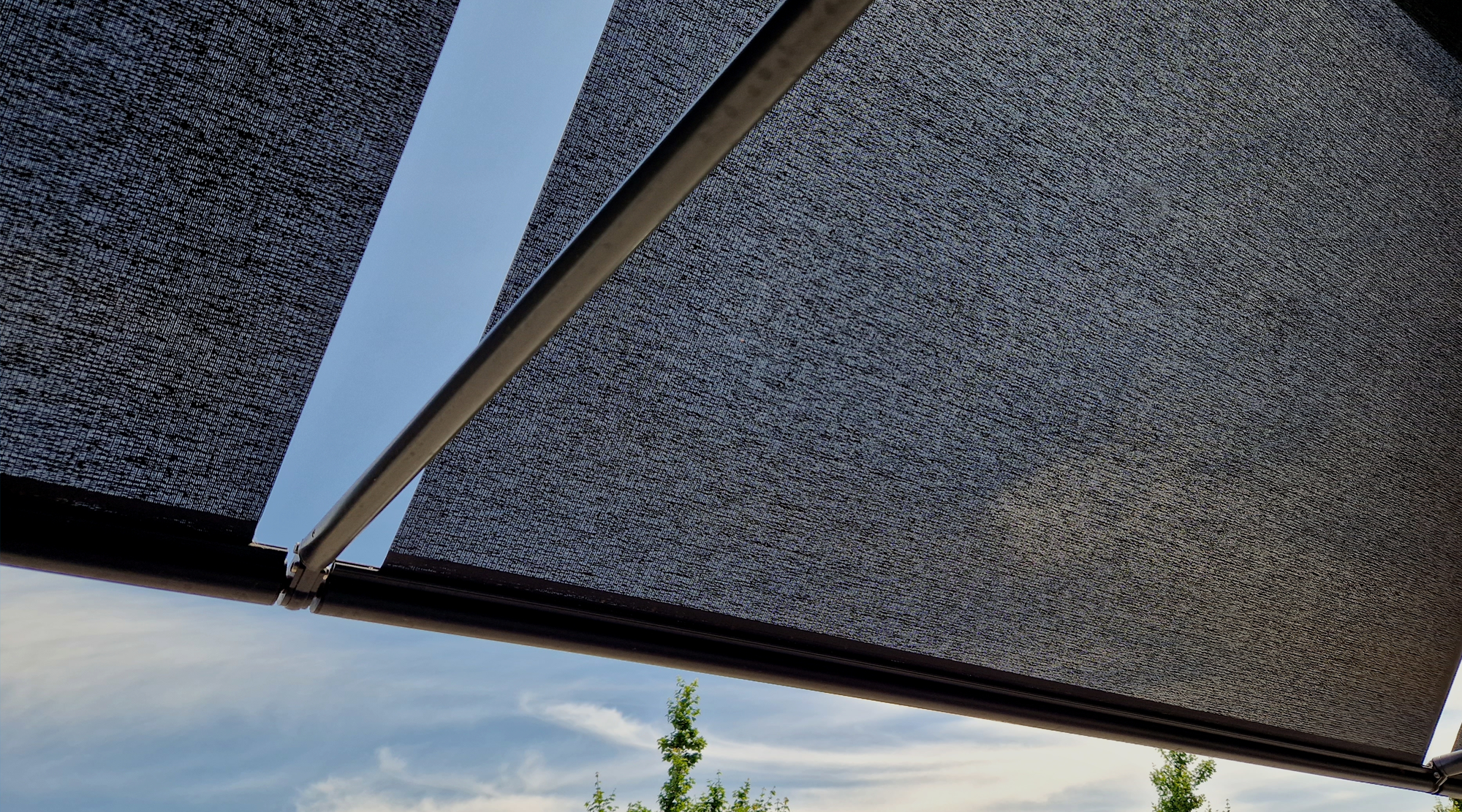
Acrylic awnings are woven from tightly packed synthetic fibers, which feature solution-dyed color, and are typically finished with water-repellent protective treatments. Woven patio umbrellas and most outdoor cushions use this same construction.
Acrylic fabric’s biggest strengths are better airflow, faster drying, and natural UV and color-fading resistance. “Solution-dyed” means the color is incorporated into the fiber itself rather than applied to the surface after construction, so the fabric holds its color through years of sun exposure. Acrylic fabric awnings handle prolonged sunlight well and are notably more breathable, allowing air to cool the area underneath.
Acrylic fabric’s main weakness is that it is not considered fully waterproof, only water-repellent, which means that you may prefer to find an acrylic fabric that has been treated for water resistance, or plan to treat it yourself if camping in rainy areas. It can still shield you from light rain and typically dries faster than vinyl.
Acrylic is the right pick for:
- Hot, sunny locations
- Campers who prioritize airflow comfort and UV protection
- Campers who want faster drying and longer color retention
Canvas Fabric Details
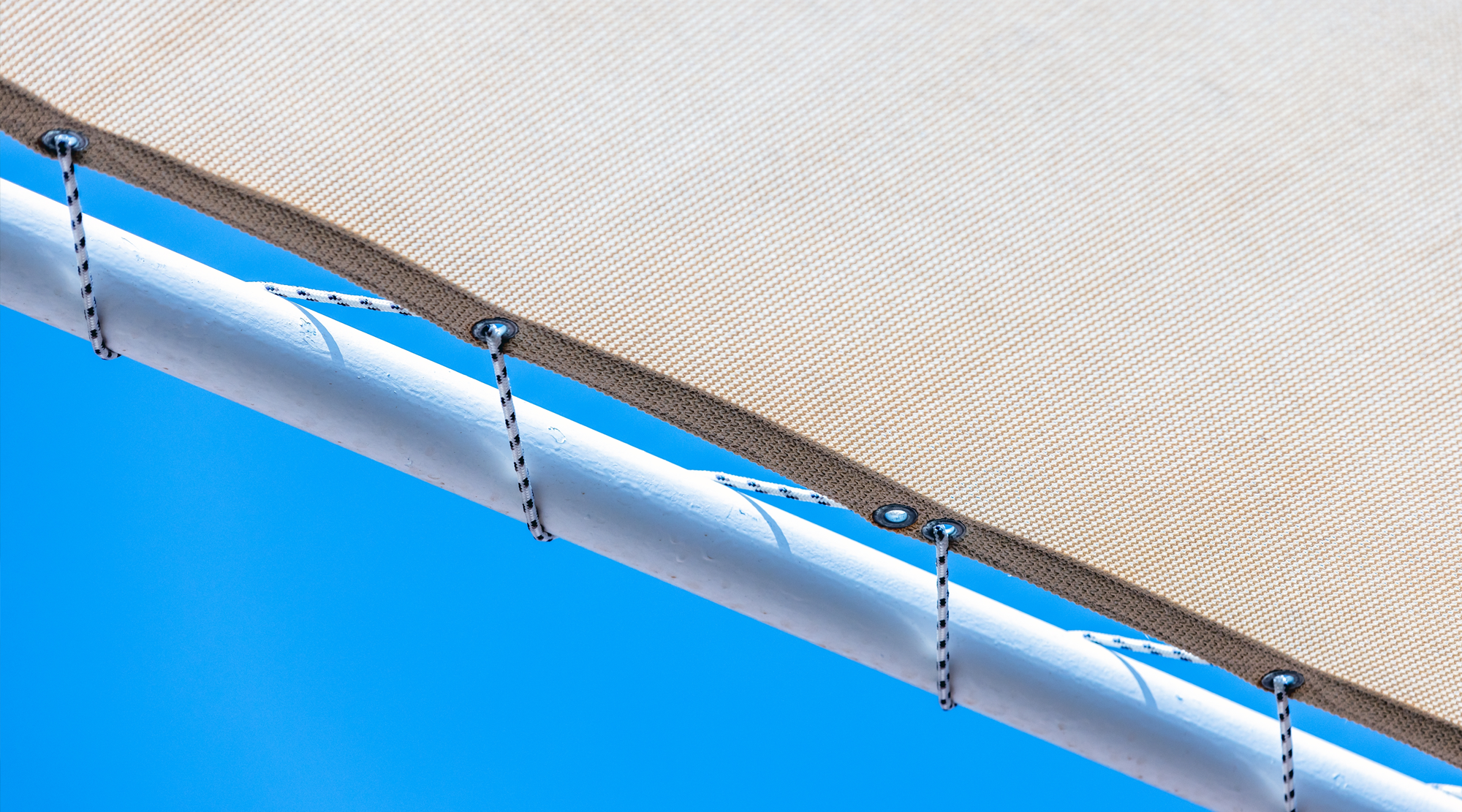 Canvas is a heavy, woven fabric made from cotton, hemp, flax, or a cotton-polyester blend. It is often used for tarps, as well as some tents and sailboat covers. Canvas is the original RV awning material, and although newer fabric types have been introduced, some campers still hunt for it, often for the classic style it adds to your RV. Modern canvas is usually treated with water-repellent, mildew-resistant, and UV-protective coatings to help it compete with newer options.
Canvas fabric’s main strength is its breathability. Similar to acrylic, canvas’ woven fibers let air and heat pass through, so the space beneath stays cooler. Due to canvas’ denser, heavier weave count, it can do better against situations like heavy winds that may cause tearing or impact damage, but it will start to show signs of wear after a long time of receiving heavy impact.
Its weaknesses are its weight and moisture absorption. Canvas is noticeably heavier than other awning fabrics, which can strain lightweight awning arms and rollers. Untreated cotton also absorbs water more easily. This means canvas dries slowly and is more likely to encourage mold and mildew growth than vinyl or acrylic, both synthetic materials. To address these issues, we recommend choosing a canvas awning that comes pre-coated in protective formulas and re-applying them regularly.
Canvas is the right pick for:
- Arid, dry locations
- Campers who want a vintage, classic RV look
- RV’s with awning setups built for heavier fabric
Fabric Comparison
| Features | Vinyl Fabric | Acrylic Fabric | Canvas Fabric |
| Water Protection | Waterproof | Repellent, Can Be Treated | Repellent, Treatment Rec. |
| UV/Color Fade Resistance | Moderate, Can Be Treated | Excellent (Solution-Dyed) | Moderate, Treatment Rec. |
| Airflow Quality | Low | High | High |
| Fabric Weight | Heavy | Moderate | Heaviest |
| Cleaning Process | Least Involved, Frequent | More Involved, Periodic | Most Involved, Frequent |
| Drying Process | Slow | Quickest | Slowest |
| Availability | Common | Less Common | Rare |
| Compatibility | Most Setups | Most Setups | Specific Setups |
| (Average) Price | Lowest | Highest | High |
| (Average) Lifespan | 5-10 Years | 8-12 Years | 5-8 Years |
Neither fabric option is necessarily “better” than the other in every way, and neither is right for every RV owner. Your choice depends on how and where you camp and which features you value.
How To Compare Similar Replacement Fabric Listings
Shopping for replacement RV awning fabric can involve a surprisingly large number of textile specifications. No single term or number makes a fabric good or bad. The goal of this section is to help you identify which of the following specifications matter to you, so that you can compare listings side by side more informatively.
Fabric Construction Specifications
These specifications describe the qualities that can separate two similarly titled fabric listings. Knowing what each means and understanding which ones you value most is the next step in finding your perfect replacement fabric after you’ve decided which material type is right for you.
Fabric Weight
Weight is measured in ounces per square yard (oz/yd²). It indicates how much material and layering went into making the fabric. Heavier fabric generally resists tearing better than lighter fabric, but excess weight can strain some awning systems. Heavier weight also reduces the fabric's flexibility, which is a problem in colder climates that most RVs go through during winter storage.
Denier
Denier measures the density and thickness of the individual fibers and threads of woven fabric or PET scrim. It is measured in grams per 9,000 meters of yarn. Higher denier means a thicker weave, and lower denier means a lighter, more flexible one. Think of denier as a way to determine a fabric's core strength. RV awning fabrics typically range from 800D to 1200D.
Thickness
Thickness is measured in mils, where each mil is a one/one-thousandth fraction of an inch (0.001”). It tells you how wide the fabric is from top to bottom, which determines whether it will get caught or budge as it extends or retracts along your RV’s awning hardware. Keep in mind, thinner fabric with strong seams can still outlast thicker fabric with weak ones (more on seam construction below).
Tensile & Tear Strength
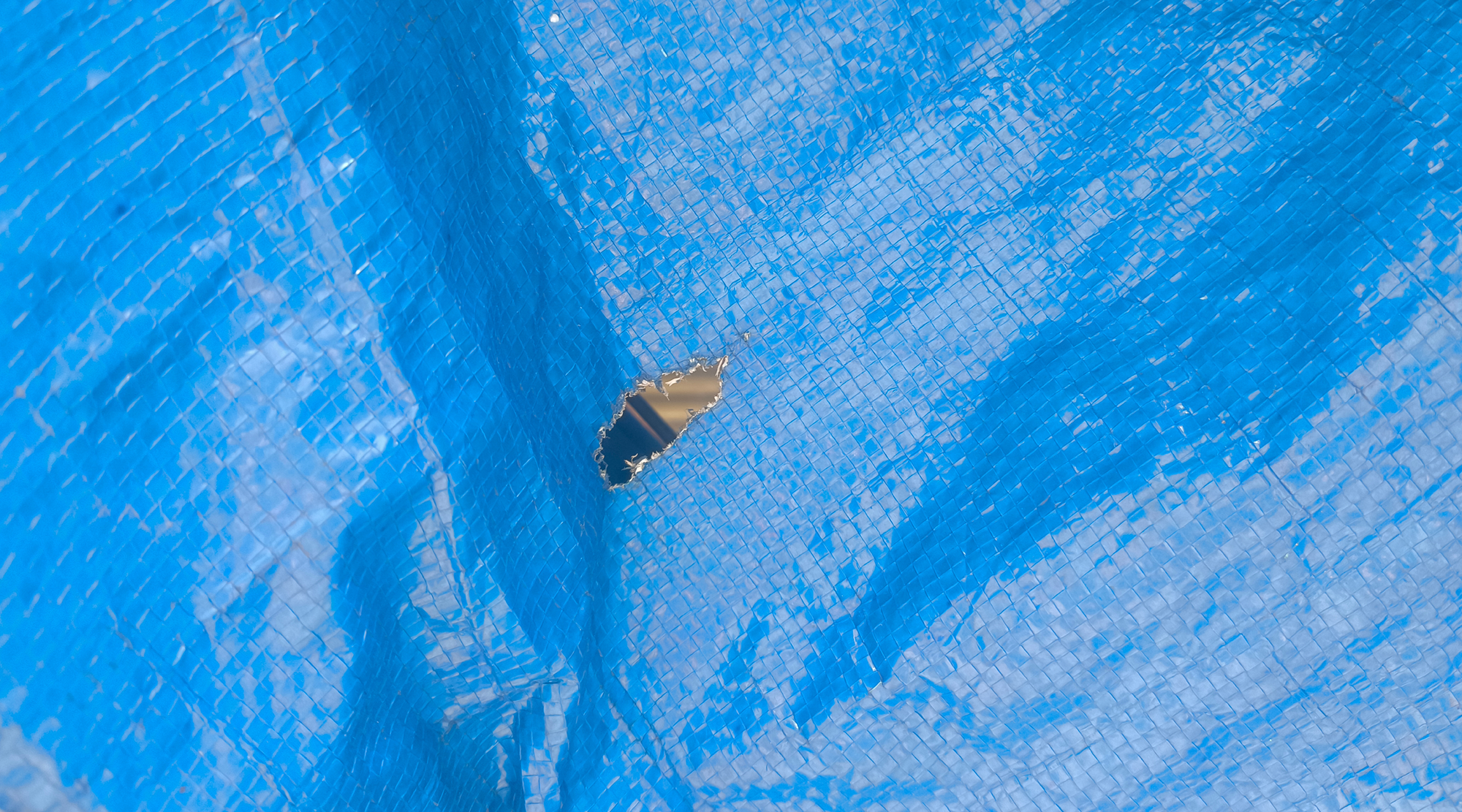
Tensile strength measures how well fabric resists being pulled apart, whereas tear strength measures how well it resists further separation once a rip has already started. Together, these two specifications can help you determine how your awning's fabric will handle things like the wind, impact damage, and small cuts.
Tensile strength is expressed as a psi rating (pounds per square inch), and tear strength is expressed as a ppi rating (pounds per inch). Manufacturers don't always publish these measurements, so a listing that does should earn extra trust.
Reinforcement Layers
When a vinyl awning is labeled "3-ply,” this refers to that same PET scrim coated between two PVC layers mentioned above. This is the most common setup of layering you'll see with vinyl listings, but other reinforcement can be included.
Extra reinforcement like UV blocking, flame-retardant, or scratch-resistant layers can be added, giving your vinyl awning some more utility. Just remember, this extra reinforcement will also add weight and thickness, so confirm your setup can handle them.
Weave Count
Weave count describes the yarn density of woven fabric, such as acrylic and canvas fabric, or the PET scrim in vinyl. Warp yarns run lengthwise (ends per inch) and weft yarns run crosswise (picks per inch). For example, an acrylic fabric labeled as "80 × 60" means that it is constructed with 80 ends and 60 picks per inch. A higher weave count blocks more water and resists tearing better, but denser fabric also allows for less air circulation.
Durability & Resistance Specifications
Once you understand how a fabric itself is constructed, look at the features that tell you how the finished product is prepared for common conditions an RV awning may be put through.
Seam Construction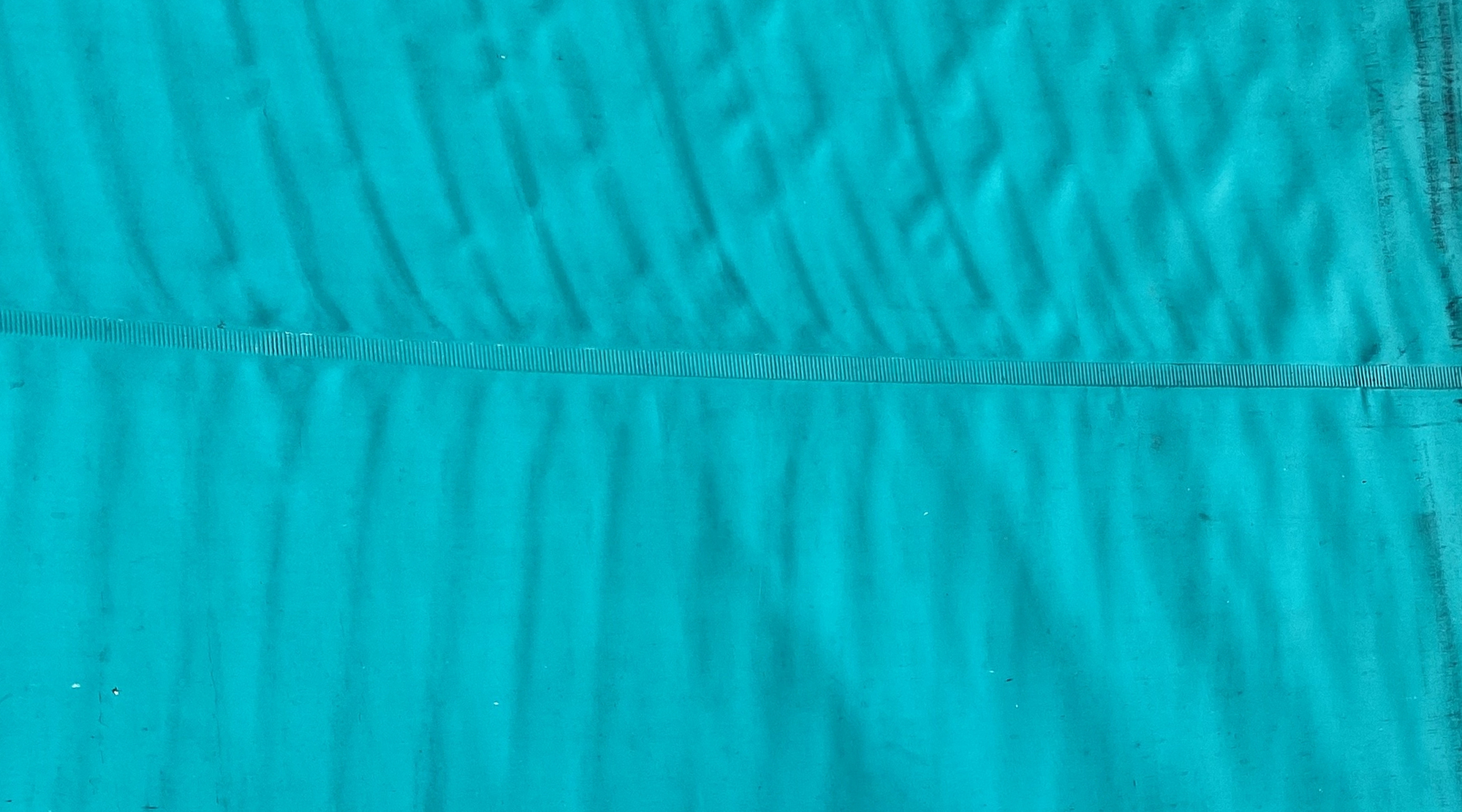 Seams are typically where fabric first shows signs of wear, which makes seam construction the most important specification in this guide. Seam wear can come from heavy rain or wind, intense UV exposure, or movement while your RV is in motion.
For vinyl and PET fabric, we highly recommend heat-welded seams, a process in which the layers of the fabric are fused without relying on thread, which removes needle holes that can sometimes invite internal water damage. For acrylic and canvas fabric, or vinyl fabric with sewn seams, look for UV-resistant threads and reinforced stress points.
If a listing doesn't describe its seams this specifically, look for details that mention reinforced corners, wind-load protection, or water-intrusion protection.
UV & Color Fade Resistance
For the average camper, your awning will spend hundreds of hours in direct sunlight. This constant UV exposure causes color fading, degrades surface materials, and weakens seam construction. Solution-dyed acrylic naturally resists UV damage and color fading. Vinyl and canvas fabric can be treated with UV-resistant coatings or formulas. Some fabrics are sold with these protective coatings already applied.
Mold & Mildew Resistance
Both vinyl and acrylic are synthetic fabric, which means they don’t naturally promote mold and mildew growth, but no fabric is mold- and mildew-proof. Dirt, pollen, and moisture buildup that isn't properly cleaned off before storage can cause mold and mildew to grow, which can lead to material deterioration and strong odors.
Water Protection
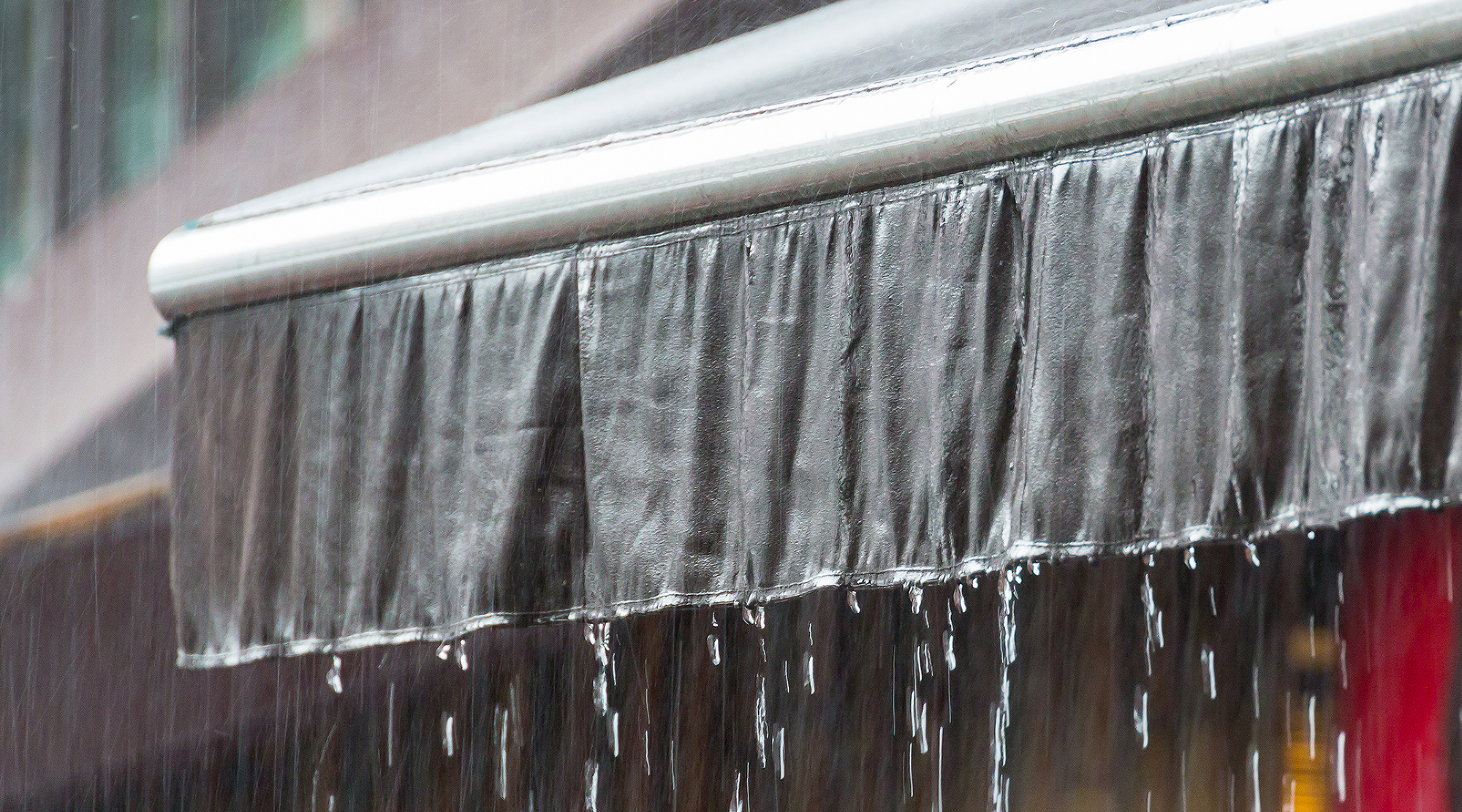 Vinyl fabric is considered waterproof, meaning water cannot pass through its surface. Acrylic and canvas fabric are water-repellent, meaning some water will bead and roll off smoothly, but they may not perform as well in heavy downpours.
Just as some fabrics can be treated with a protective coating for better UV resistance, acrylic and canvas fabrics can be treated with a protectant for better water-repelling properties.
Weather Protection
"All-weather" and "heavy-duty" are marketing terms, not features or specifications. The more specific the listing, the fewer surprises you'll have, so look for things like "cold-crack tested to -25°F." This testing confirms that the fabric stays flexible in freezing temperatures and may appeal more to owners who store their RV in colder regions for the winter. Rather than trusting an “all-weather” detail, look for some of the specifications mentioned above.
Understand Which Specifications You Should Prioritize
By now, you know what the most important specifications mean and what they bring to the table. The next step is deciding which ones deserve the most attention based on how you camp:
- Hot, sunny areas: acrylic or UV-treated vinyl, UV- and color fade-resistant surfaces, heat-welded seams or UV-resistant threads, and a less dense construction.
- Rainy areas: waterproof vinyl or water-treated acrylic, heat-welded seams or water-intrusion-resistant threads, mold- and mildew-resistant, a thicker layer or weave count, and an easier-to-clean surface.
- Humid areas: fabric that dries quickly, resists mold and mildew, resists UV, has heat-welded seams or water-intrusion-resistant threads, and has a less dense construction.
- Colder areas: fabric with a specified cold-crack test rating (preferably -25°F), less dense construction, reinforced seam stress points, and high tensile and tear strength.
- Frequent or full-time RVers: heat-welded seams, high tensile and tear strength, higher weight and denier (still compatible with your setup), and as many of the protection-related specifications mentioned above as possible.
How to Measure for Replacement Fabric
Advertised awning size rarely equals actual fabric width. Fabric sold for an 18-foot awning setup is often closer to 17 feet wide because manufacturers leave room for hardware and your RV’s awning arms. Ordering replacement fabric by simply measuring the width of your old fabric will most likely lead you to buy a replacement that is too small.
Determining The Right Size
Always follow the measuring instructions provided by the replacement-fabric manufacturer, but a common sizing method for awning fabric is: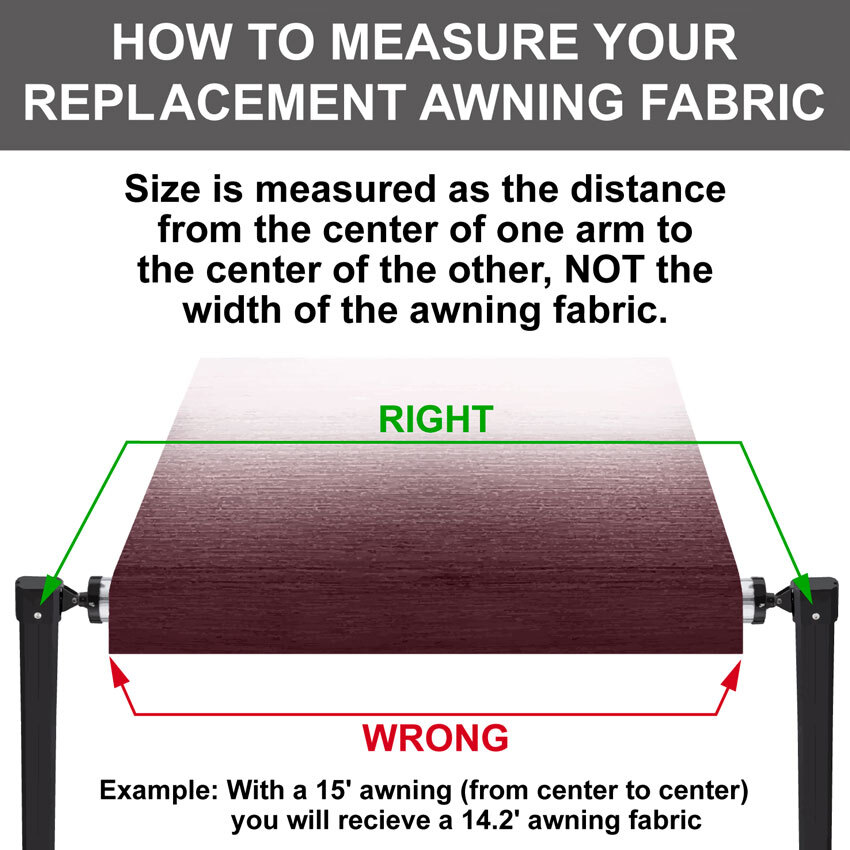
- Check the replacement fabric listing for a sizing chart. Most reputable listings will include one.
- Look at your RV’s current awning setup and measure from the center of one awning arm to the center of the other. Most fabrics use this as the nominal width.
- Don't assume the replacement fabric will be the same width. Actual width will run shorter than nominal width.
- Check the replacement listing’s extension length. Many awnings and awning fabrics are built to extend up to 8 feet, but verify yours by looking up your awning's model number and confirm it matches the fabric you plan to purchase. Fabric that's too long will sag and provide poor coverage, and fabric that's too short can rip or strain the extension arms.
Checking for Hardware Compatibility
Correct dimensions don't guarantee a correct fit. Confirm that the replacement fabric works with your RV’s:
- Roller tube
- Awning rail or track
- Polycord or polybead
- Arms and surface hardware
- LED lighting
Some listings will name compatible awning frame brands as well as exclusions. For example, both fabrics compared below are incompatible with metal surface covers.
Care & Maintenance Recommendations
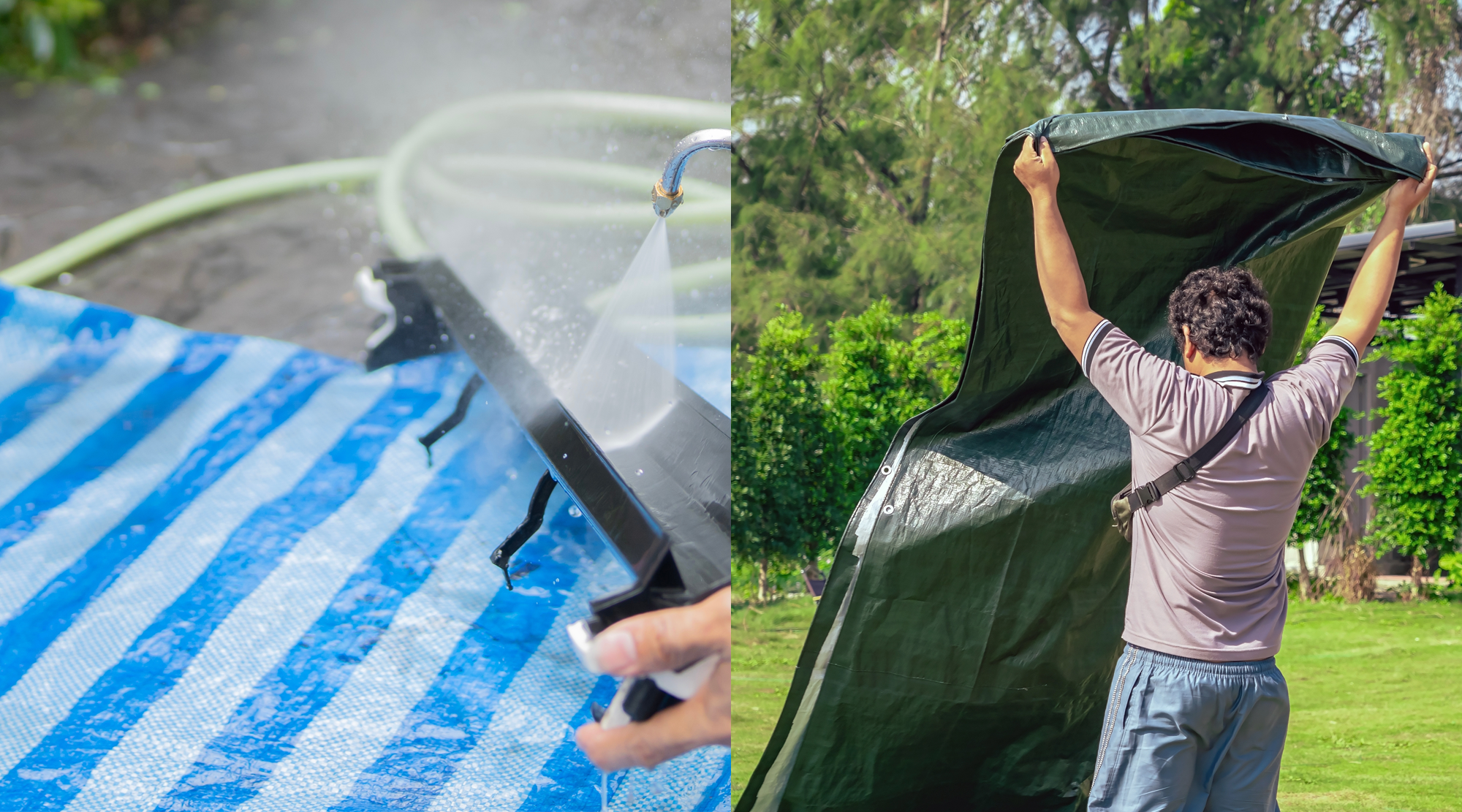
Even durable outdoor material can deteriorate prematurely without proper care. For most RV awnings, a few basic habits can make a significant difference:
- Routine cleaning. Use water, mild soap, and a soft brush or rag every time dirt or grime builds up on your awning. Do not scrub too intensely. Rinse completely.
- Thoroughly dry. Rolling up and storing a damp or dirty awning causes mold and mildew growth, surface discoloration, internal deterioration, and harsh odors.
- Retract during severe weather. Awning fabric is intended to provide shade and weather protection, but an extended awning can still be vulnerable to damage from strong winds and severe storms.
- Follow your fabric’s care instructions. Different materials require different cleaners and treatments. Unapproved chemicals can cause deterioration in material, color, and repellent coatings.
Additionally, catching minor damage early may prevent you from needing a replacement prematurely. Along with these habits, you should be regularly inspecting the integrity of your awning’s:
- Seams and stitching
- Edges and hems
- Stress points
- Polycords or polybeads
- Small cuts or tears
- Roller alignment
- Mounting hardware
RecPro vs. Competitor: Analysis
So far, the material and buying recommendations in this guide apply to all fabric listings, regardless of manufacturer or retailer. To show how to use these notes during an actual purchase, let's compare two similar 18-foot vinyl replacement fabric listings. We compared RecPro's 18' RV Awning Replacement Fabric and ShadePro's 18' RV Awning Replacement Fabric.
| Specifications | RecPro | ShadePro |
| Fabric Material Type | Vinyl (PVC) | Vinyl (PVC) |
| Fabric Weight | 16 oz/yd² | 15 oz/yd² |
| Denier | 1000D | 1000D |
| Thickness | 1/16" (62.5 mils) | Not Specified |
| Tensile & Tear Strength | 140 psi (ppi Not Specified) | psi & ppi Not Specified |
| Layer Count | 3-ply | 3-ply |
| Seam Construction | Heat-Welded, Reinforced Stress Pts | Sewn Seams & Hems |
| UV/Color Fade Resistance | Resistant | Resistant |
| Mold/Mildew Resistance | Resistant (Synthetic Material) | Resistant (Synthetic Material) |
| Water Protection | Waterproof | Waterproof |
| Cold Weather Protection | Cold-Crack Tested (-25°F) | Cold-Crack Test (-20°F) |
| Extension Length | 8 Feet | 8 Feet |
| Actual Fabric Width | 17'1" | 17'2" |
| Awning Compatibility (Neither Work with Metal Covers) | Industry-Standard, Universal Fitting. | Carefree, Dometic, Velarium, Lippert with 3" Roller Tubes. |
| Fabric Warranty | 5 Years | 3 Years |
These specifications were based on the manufacturers' currently published information and may eventually change. You can read more about RecPro’s warranty policies here.
Analyzing These Two Listings
At first glance, both fabrics match in material type, denier, extension length, and UV and mildew resistance. Both use the basic 3-ply (1 PET scrim mesh + 2 PVC vinyl layers on either side) construction with no extra reinforcement layers.
The biggest difference is the seams. RecPro’s fabric has heat-welded seams and reinforced stress points, while ShadePro’s fabric features sewn seams and hems. Sewn seams can still perform well, and many vinyl fabric awnings that use this method use UV-resistant threads, but heat-welding removes stitching holes that can let water seep through and cause internal mold and mildew deterioration over time.
Other differences are that RecPro states their fabric’s tensile strength and thickness, has a slightly heavier weight, a lower tested cold-crack rating, and a longer warranty period. ShadePro names specific compatible brands, which helps confirm direct compatibility quickly, and it's slightly lighter, which may be preferable for some setups.
RecPro's fabric may appeal to shoppers who prioritize a slightly heavier weight, heat-welded construction, and lower-tested cold resistance. ShadePro's fabric may appeal to shoppers who value its sewn-seam construction and more specific awning-brand compatibility.
The important takeaway isn't that one fabric wins every category. It's that specifications give you much more useful information than a generic description, and comparing two or several listings is the point we are trying to stress with this model.
Choosing the Right RV Awning Material
The right replacement fabric should match your camping lifestyle and your RV’s awning hardware. Each of the three fabric types responds differently to heavy rain, intense sunlight, and constant moisture, so it is important to understand those differences before moving on.
Then, once you have a sense of which fabric is the best fit for you, use the additional list of specifications to separate similarly titled listings from one another. Use features such as seam construction, weight, and thickness to decide which listing sounds like it was made with the details you care about.
Once you’ve narrowed your search to a replacement fabric made from the right material and with the features you want, the final step is to measure your RV's awning system according to the replacement fabric manufacturer's instructions and confirm the two are compatible. If you follow this guide’s steps, we are confident you’ll find a fabric you're happy with and can sit under comfortably for years to come.
If you have any questions about awning fabric materials, specifications, measuring, or maintenance, please contact our customer care team for more information.
Recent Posts
-

RecPro Visits The 2026 Elkhart RV Dealer Open House At The RV/MH Hall of Fame
From September 28th-30th, hundreds of 2027 model-year RVs, including several debut models, were on d …Oct 01, 2026 -

Traveling to the RV Hall of Fame in Elkhart, IN
If you are traveling to Elkhart, IN to see the RV Hall of Fame, getting off the toll road at exit 96 …Nov 14, 2025 -
Best RV Air Conditioners of 2025: An Expert Guide From RecPro
Quick Answers Best overall RV air conditioner: RecPro 15K Quiet AC with Heat Pump (RP-AC3800) Best f …Oct 29, 2025 -
The Nuclear Nomads Expand Sofa with New Recliner Section Install
The Nuclear Nomads are a full time RV family living in south Florida. Andi and Joey value quality ti …Oct 24, 2025 -

Trailer Wiring Guide: How to Wire Your Trailer for Safety and Efficiency
Table of Contents 1. Common Types of Trailer Connectors2. Trailer Wiring Diagrams: Color Codes and F …Aug 20, 2024 -

How to Keep Your Pets Safe While Camping
RVing and camping are a great getaway from the hustle and bustle of work and the city and the day-to …Jul 02, 2024