Depending on your preference, you may like your recreational vehicle to have a "retro" look, while others prefer a more contemporary aesthetic for their RV. Regardless of your visual interest, you will always want to be on the forefront of technology when it comes to the electrical components in your vehicle. It is imperative to keep the latest hardware in your rig. When it comes to wiring, sentimentality for keeping it "all original" won't keep you safe. Old wiring = new problems. RecPro offers excellent selection, the best brands, and the latest models of electrical products for running electronics in RVs and updating wiring.
The basics of what we offer
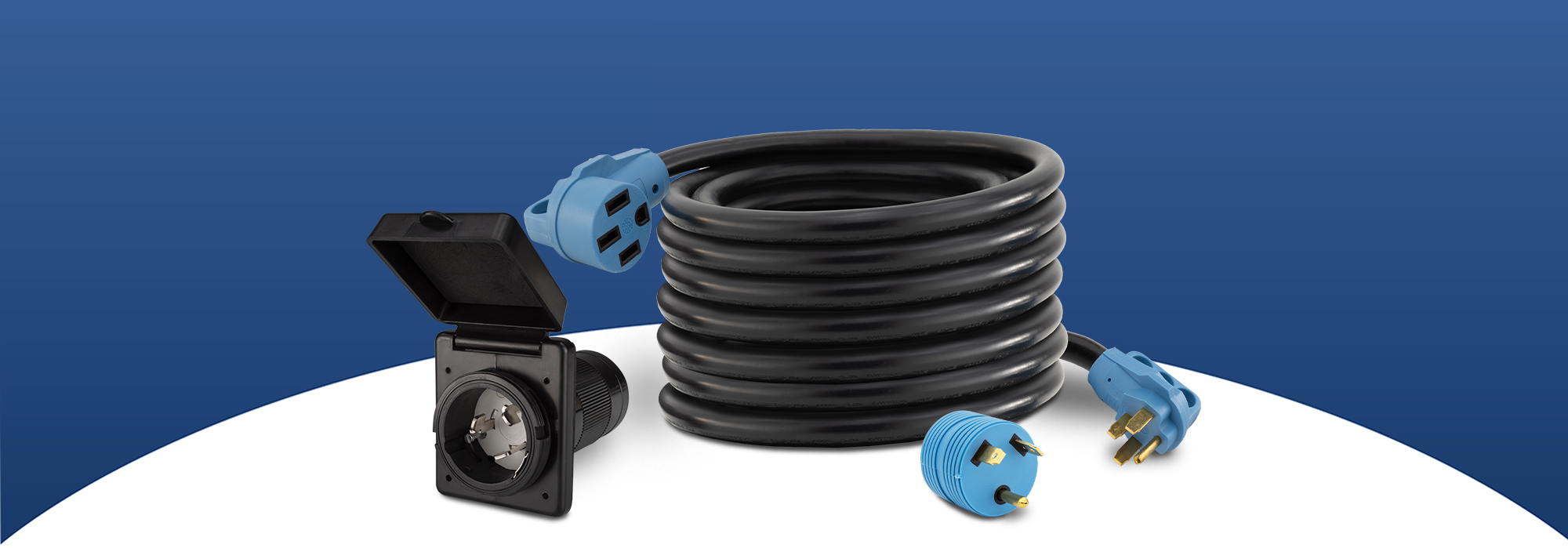
Female Connectors. Choose from either white or black 125 volt female connectors. These connectors are highly resistant to damage from corrosion and other weathering elements. For added protection, some of our kits have a boot included with a threaded seal ring for a secure seal. Some of the kits offer a choice between 30 or 50 amps.
Power Sockets. To run your electrical components at proper levels of functionality, the right power socket is a must. We offer specialized sockets specifically for USB applications that can also function as a utility lighter. These sockets are cross-functional so that not only can they be used in RVs, they can also be used for golf carts, boats, and trucks. All our sockets boast an excellent and high-quality design that allows them to withstand high energy output without risk of becoming damaged from exposure to overheating. Invest in the best quality sockets so that your RV adventures are always worry-free.
Power Inlets. These inlets are available for direct installation for RV and marine use. They function to provide detachable power connection, while utilizing an easy locking system. The anti-corrosive material is made of UV stabilized resin to keep the unit function properly for years to come.
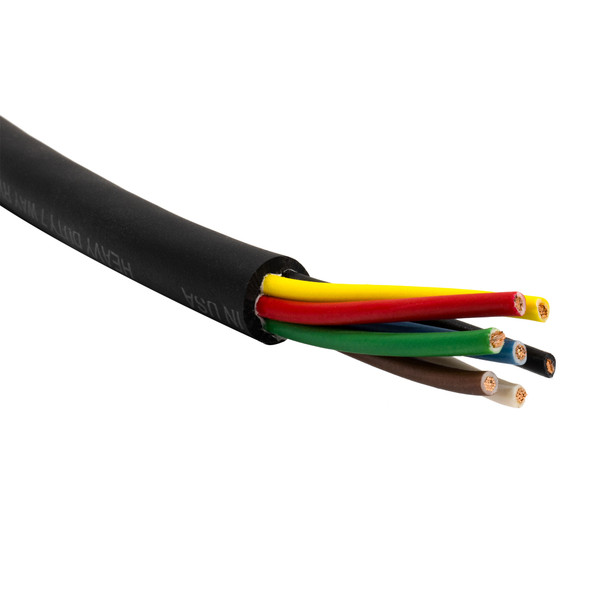
Trailer Wire. Proper wiring is crucial for your recreational vehicle. It allows for the transfer of power to your trailer which initiates functions such as the brake controller, backup lights, and interior trailer lights. All things that are essential for legal and safe operation while you're out on the road.
RecPro offers premium quality trailer wire that is excellent for wiring trucks and trailers. Our wiring is durable and highly resistant to weathering, cracking, oil, abrasion, and acid. With our selection, it should be no problem for you to choose the wires and connectors that have the right capacity for your trailer. All of the wires are covered by a protective PVC jacket. Different applications call for different gauges of wire, with varying internal capacities. Click through our web catalog to see all that we offer. Once you're ready, specify footage and we will ship your wire to you in one continuous piece unless otherwise specified.
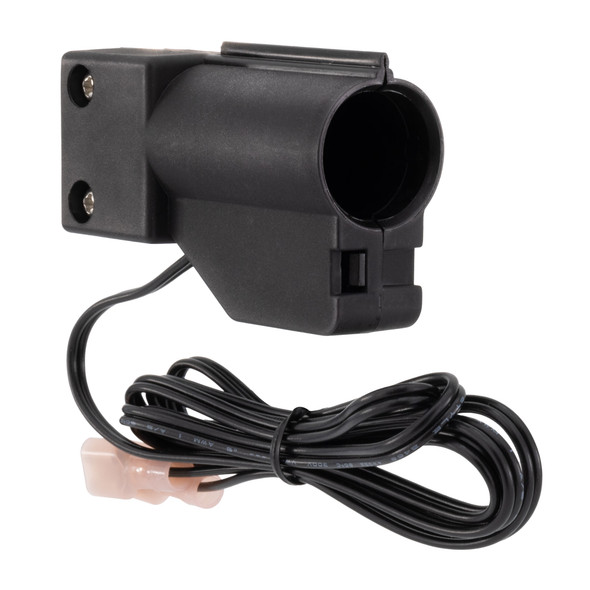
Switches. Sometimes, it’s the little things that count, which includes the breakaway switch cable. Safety and peace of mind are paramount to the enjoyment of your RV. One essential safety feature is the breakaway switch cable that can prevent life-threatening situations in the event that the braking system fails to function properly. This important switch can activate electric brakes in an emergency, preventing devastating accidents. If you don't have this for your RV, you need it for your safety and the safety of others. An ounce of prevention avoids a ton of lawsuits and rising insurance premiums.
Converters and Generators. When it comes to RV power, these two tools are super important. You don’t want to go anywhere without a way to charge your battery and a backup power source. Just imagine being stuck out in the wilderness without any power. It’s a bit scary to think about, especially if you were planning on staying in touch with civilization.
General RV Electrical FAQ
What types of electrical systems does an RV have?
Most RVs are designed with two electrical systems:
A 12-volt DC system that powers lights, water pump, fans, slides, and other small items.
A 120-volt AC system that powers outlets, microwaves, air conditioners, and other large appliances.
How does my RV get power?
Your RV can get power from a 30 or 50 amp shore power hookup 12-volt batteries, a generator, or solar panels.
What’s the difference between 30-amp and 50-amp RV service?
30-amp power has one hot wire and offers a maximum 3,600 watts. 50-amp power has two hot wires, offers a maximum 12,000 watts, and is capable of running more appliances simultaneously than 30-amp power.
Why do my breakers keep tripping?
If your circuit breakers are tripping often, it could be due to:
- Too many appliances running at once
- A faulty appliance
- Bad or loose wiring
- A weak pedestal or bad campground power
Why do my lights work but my outlets don’t?
Your lights run on your RVs 12-volt DC power system while the outlets run on its 120-volt AC power system. If your outlets aren’t working, check the GFCI reset button or a tripped circuit breaker. Also make sure that you’re properly plugged in and that your inverter is working (if using off-grid power).
How long will my RV battery last?
Most RV batteries will last 1 to 2 days with typical use without charging. The actual duration of your RV batteries will depend on the size/amp-hours of your batteries, what your powering, and the age/condition of your batteries.
Why do my RV batteries die so quickly?
Your RV batteries dying quickly may be the result of:
- Old or sulfated batteries
- Not fully charging the batteries
- Parasitic drains (propane detectors, radio, fridge board)
- Leaving lights or fans on when not needed
- Using an inverter without enough battery capacity
Do I need an inverter?
You will only need an inverter if you want to run appliances on the 120-volt power system (AC power) using your RV batteries as the power supply. Without an inverter, you must be plugged in to share power or run a generator to use the 120-volt power system.
Can I run my RV air conditioner on batteries?
Normally, no. Most RV air conditioners require a lot of power and run on your 120-volt AC power system, which is usually only supported by shore power, a generator, or a large lithium battery plus inverter setup (high-end). However, some RV air conditioners, such as the ones offered here at RecPro, are designed to run off of 48-volt DC battery power systems.
Is it safe to plug my RV into a household outlet?
Yes, it is safe to plug your RV into a household outlet as long as you are using the proper adapter. However, You can only use 15 amps when doing so, so you should avoid running air conditioners or running multiple appliances at once.
What does a converter do?
An RV converter turns 120-volt AC power from shore power and generators into 12-volt DC power, which is then used to charge your batteries and run DC appliances.
What does an inverter do?
An inverter does the opposite of a converter; it turns 12-volt DC power from your RV batteries into 120-volt AC power, allowing you to use regular appliances off-grid.
Do RVs have fuses?
Yes — the 12-volt system uses fuses, while the 120-volt system uses circuit breakers. A blown fuse often causes things like lights, fans, or the water pump to stop working.
Why do my batteries not charge while plugged in?
Your RV batteries failing to charge while your RV is plugged in may be due to:
- A faulty converter
- A tripped breaker
- Loose or corroded battery cables
- A dead battery
Can I mix battery types (like AGM and lithium)?
No, you should never mix battery types. Mixing battery types is dangerous and can lead to issues such as:
- Uneven charging
- A shortened battery lifespan
- Potential damage
Always use batteries of the same type, age, and size.





 $25.95


 $10.95
 $10.95
 $10.95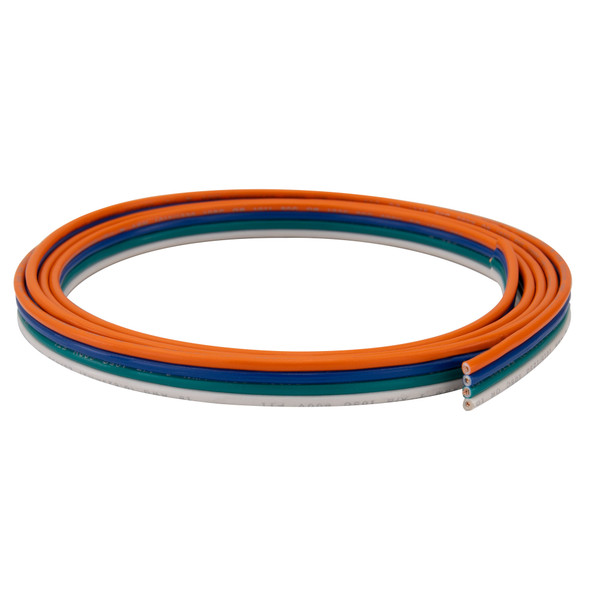
 $10.95
 $12.95
 $20.95
 $12.95
 $20.95
 $31.95
 $31.95
 $20.95
 $31.95
 $20.95
 $31.95
 $31.95
 Now: $6.95Was: $7.95